Protecting the Human Firewall: Why Employee PII is the New Cybersecurity Perimeter
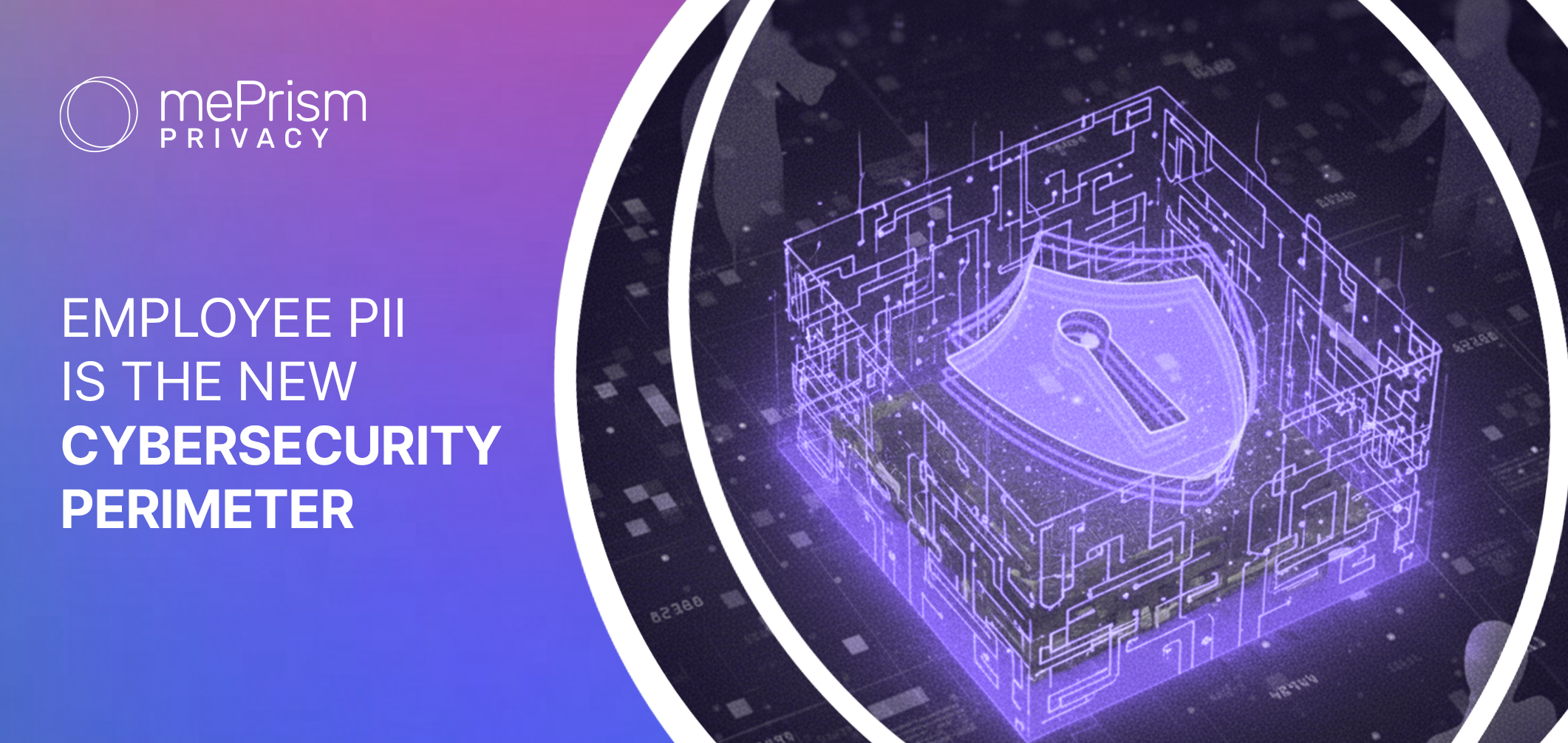
In the world of modern cybersecurity, we have spent billions of dollars hardening the digital perimeter. We have deployed next-generation firewalls, sophisticated endpoint detection and response (EDR) tools, and zero-trust architectures. Yet, despite these massive investments, the most devastating breaches of the last year didn’t start with a software vulnerability. They started with a name, a home address, and a carefully crafted email.
The perimeter has shifted. It is no longer a digital wall; it is your people. And right now, your people are exposed.
The Evolution of the Threat: Phishing vs. Spear Phishing
Traditional phishing is a numbers game—a "spray and pray" tactic where hackers send thousands of generic emails hoping a few people click. Spear phishing, however, is a sniper’s game. It is a highly targeted and personalized attack designed to deceive a specific individual within an organization.
To make these attacks work, hackers need intelligence. In the past, this required physical surveillance. Today, it requires a $20 subscription to a data broker.
In a recent analysis, the IAPP highlighted why organizations must prioritize employee data protection. When an employee’s personal information—their home address, spouse’s name, or even their child’s school—is available on the open web, it provides the "social proof" necessary to make a fraudulent email indistinguishable from a legitimate one.
How Data Brokers Fuel the Reconnaissance Phase
Every successful spear phishing attack begins with reconnaissance. Threat actors use Open Source Intelligence (OSINT) to build a dossier on their target. While LinkedIn provides professional context, commercial data brokers provide the personal "hooks" that bypass a person’s natural skepticism.
According to the 2024 Verizon Data Breach Investigations Report (DBIR), approximately 68% of breaches involve a non-malicious human element, primarily through social engineering. Hackers aren't just looking for corporate credentials; they are looking for the "life data" that allows them to impersonate a trusted source.
For instance, if a hacker knows an executive is currently undergoing a home renovation—information easily found through property records indexed by people-search sites—they can craft a spear-phishing email appearing to be from a local contractor or the municipal permit office.
The Weaponization of PII
We often think of privacy as a personal luxury, but in a corporate context, it is a tactical necessity. When the personal details of a software engineer or a financial controller are for sale for pennies, it creates what security experts call Ubiquitous Technical Surveillance.
As we explored in our deep dive into Data Brokers and National Security, the exposure of Personally Identifiable Information (PII) allows adversaries to monitor the movements and family lives of key personnel. If a hacker knows where you live and who your relatives are, they can craft an "urgent family emergency" lure that almost any employee would click on without thinking.
Is your data being used against you?
We scan hundreds of data broker sites to see exactly where your home address, phone number, and family details are exposed. It takes 60 seconds to see what they know about you.
Because your data shouldn’t be a roadmap for violence.
Why Traditional "Security Awareness Training" is Not Enough
For years, the solution to phishing was "awareness training." We taught employees to look for misspelled words or strange sender addresses. But as we enter the era of AI-driven phishing, these red flags are disappearing. Large Language Models (LLMs) allow attackers to generate perfectly written, culturally nuanced emails in seconds.
If an attacker has access to an employee's data broker profile, the AI can weave in specific personal details to create a narrative that is logically sound and emotionally compelling. No amount of training can prepare an employee for an attack that uses their own reality against them.
The only way to win this game is to shrink the attack surface. If the data isn't there to be found, the attack cannot be personalized.
The Shift to Active Data Minimization
To protect the organization, we must protect the individual. Organizations are beginning to realize that employee privacy is a corporate security responsibility. This is where the concept of a Privacy Agent comes into play.
As discussed in The Digital Privacy Agents' Legal Power, Meprism acts as a consumer agent, using legal and automated frameworks to exercise data rights on behalf of employees. This removes the "manual labor" of privacy from the employee’s shoulders and ensures a continuous, scalable defense.
Conclusion: A Strong Recommendation for Meprism Privacy
The "Public Data" excuse is dead. In a world where your personal life is the low-cost fuel for cyber espionage, leaving employee PII on the open web is an unacceptable risk.
Traditional cybersecurity stops at the office door, but your employees’ vulnerabilities follow them home. We strongly recommend that companies adopt Meprism Privacy as a core component of their cybersecurity stack. Our platform provides an automated solution to scrub employee and executive PII from over 600+ data broker and people-search sites.
By removing the raw material used for reconnaissance, we effectively "blind" the attacker before they can even send the first email.
Don't wait for a spear-phishing attack to expose the gaps in your defense. Book a demo with Meprism today to see how we can help your company achieve active data minimization and close the door on social engineering.
Ready to try mePrism yourself?
If you're a company protecting at-risk employees, or an individual concerned about your digital footprint, start your privacy removal today at mePrism.com.
Because your data shouldn’t be a roadmap for violence.
Explore more from Our Team
Browse more posts written by our team to help you stay in control.
Be Part of the Conversation